
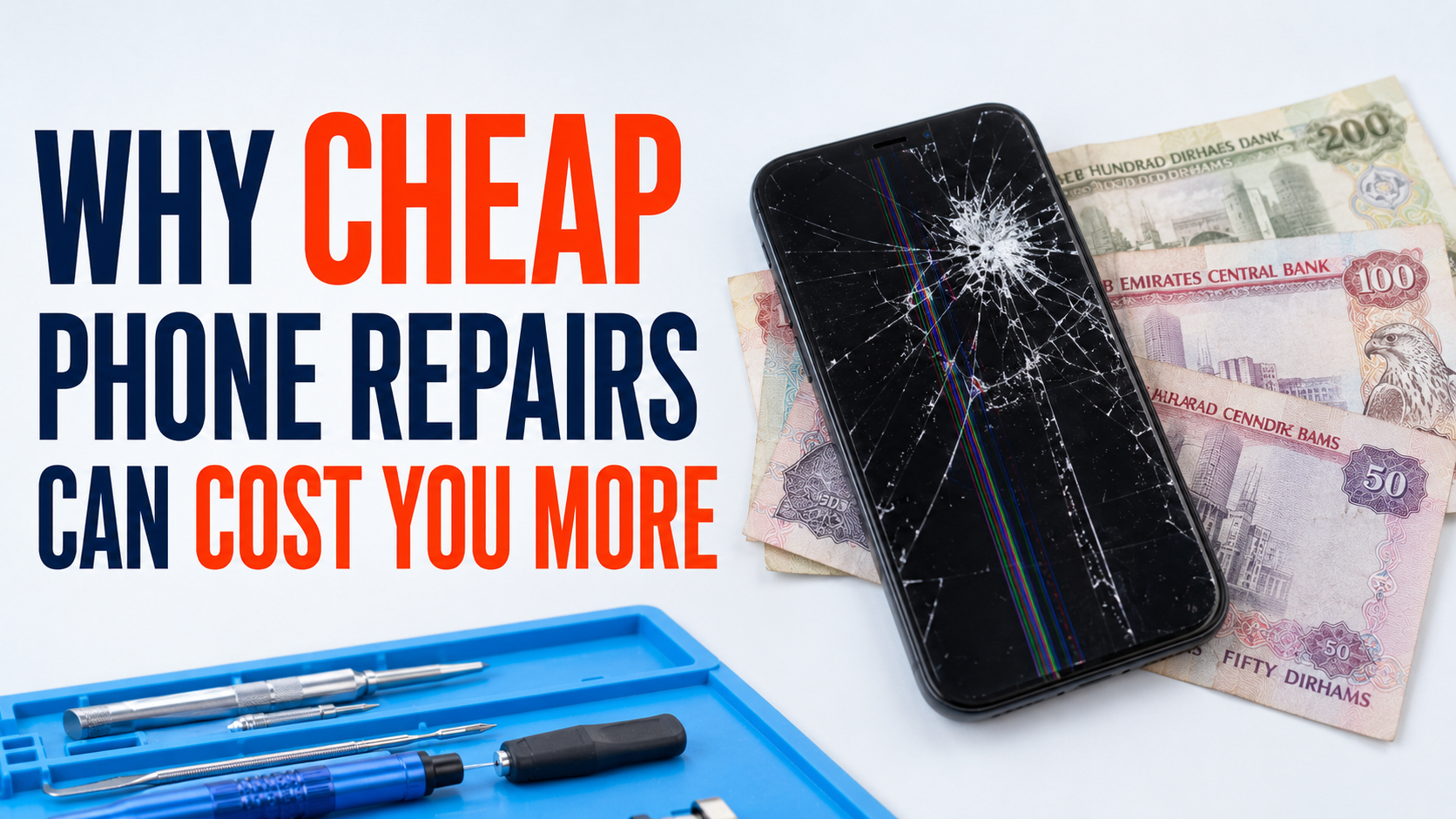
A cheap phone repair may save money initially, but low-quality parts, incorrect diagnosis and inexperienced workmanship can cause repeat failures and more expensive damage.
When your phone breaks, choosing the cheapest repair quotation may seem like the best way to save money. However, a very low-priced repair can sometimes create additional problems that cost more to correct later.
The lowest quotation may involve a poor-quality spare part, incomplete diagnosis, weak adhesive, insufficient testing or an inexperienced technician. Your phone may work when you collect it but develop display, charging, battery or motherboard problems shortly afterwards.
An affordable repair is not necessarily a bad repair. The concern is when the price is unusually low and the repair centre cannot clearly explain the part quality, repair method or warranty.
Why Do Phone Repair Prices Differ?
Two repair centres may quote very different prices for the same phone because they may not be offering the same service.
The final price can depend on:
Spare-part quality Technician experience Diagnostic procedures Repair equipment Adhesive and installation materials Testing process Warranty coverage Whether the part is new, used or refurbished Whether the repair includes the frame After-service support
Customers should compare what is included rather than looking only at the final amount.
Low-Quality Displays Can Cause More Problems
Replacement displays are available in original, refurbished original, premium aftermarket and low-grade copy qualities.
A cheap copy display may turn on and show an image, but its performance can be very different from the original screen.
Possible problems include:
Low brightness Poor outdoor visibility Washed-out or inaccurate colours Delayed or inaccurate touch response Reduced refresh rate Thicker black borders Weak outer glass Screen lifting from the frame Fingerprint-recognition failure Proximity-sensor problems Increased battery consumption
Some inexpensive replacements use LCD technology in phones originally designed for OLED displays. An LCD requires a continuously powered backlight and may consume more energy.
This can contribute to:
Faster battery drain Reduced battery backup Additional heat during use Higher power consumption at maximum brightness
Not every aftermarket display will cause these problems. Premium aftermarket and properly refurbished original displays can provide acceptable performance. The repair centre should explain the exact display quality before installation.
Cheap Batteries May Be Unreliable or Unsafe
A low-priced replacement battery may have a lower actual capacity than the number printed on its label.
A poor-quality battery can cause:
Rapid battery drain Sudden shutdowns Incorrect percentage readings Slow or unstable charging Excessive heating Reduced phone performance Battery-health warnings Swelling
A swollen battery can push against the display or back panel. This may damage the screen, bend the housing and create a safety risk.
If the battery fails quickly or damages another component, the customer may need to pay for both a second battery replacement and additional repairs.
Low-Quality Charging Parts Can Affect Other Functions
The charging-port assembly may connect to more than the charger. Depending on the phone model, it may also support:
Microphone functions Mobile-network antennas Loudspeaker connections USB data transfer Fast charging Computer connectivity
An incompatible or low-grade charging part may cause:
Slow charging Charging only at certain angles Fast charging not working Poor microphone quality Weak network signal USB connection failure Overheating near the port Moisture or accessory warnings
If the charging problem originates from the battery or motherboard, changing the charging port will not solve it. Proper diagnosis must come before part replacement.
Poor-Quality Adhesive Can Make the Repair Fail
The quality of the adhesive used during display and back-panel replacement is also important.
Weak or incorrectly applied adhesive can result in:
The display lifting from the frame Gaps around the back panel Dust entering the cameras Moisture entering the phone more easily Flex cables moving or becoming damaged Poor alignment between components
Opening a phone breaks its factory sealing. A technician can apply new adhesive, but the original water-resistance rating cannot always be guaranteed after repair.
Inexperienced Repairs Can Cause Additional Damage
Modern smartphones contain delicate flex cables, sensors, connectors, cameras and closely positioned motherboard components.
An inexperienced technician may accidentally:
Tear a display or fingerprint flex cable Damage Face ID or biometric components Break motherboard connectors Use excessive heat near the battery Damage cameras or sensors Install screws in the wrong locations Leave screws or protective shields missing Create motherboard short circuits Damage the phone’s frame Trap dust inside the camera or display Apply too much or too little adhesive
These problems may not always appear immediately. The phone might initially work but later develop touch, charging, camera, network or display faults.
Incorrect Diagnosis Can Waste Your Money
A phone’s visible symptom does not always reveal the actual faulty component.
For example:
A phone that does not charge may have a cable, port, battery or motherboard fault. A blank screen may be caused by the display, flex cable or display-power circuit. Fast battery drain may come from the battery, display, software or motherboard. Weak network signal may be caused by the antenna, housing or baseband circuit. A phone stuck on the logo may have a software, storage or motherboard problem.
Replacing parts without diagnosing the cause can waste money and make the original problem more difficult to repair.
A professional technician should inspect the device and explain whether the fault is confirmed or if additional testing is needed.
Temporary Repairs May Not Last
Some low-cost services repair only the visible symptom without correcting the underlying problem.
Examples include:
Pressing a loose connector into place without securing it Applying excessive heat to temporarily restore a motherboard connection Cleaning corrosion without checking the affected circuits Installing an incorrect component that only partially works Bypassing a damaged circuit instead of repairing it safely
The device may work temporarily, but the fault can return after a few hours, days or weeks.
Missing Parts Can Create Future Problems
During an improper repair, small internal parts may be lost or deliberately left out.
These may include:
Metal shields Brackets Grounding clips Protective foam Rubber seals Screws Camera covers Antenna contacts
Although these components appear small, they may protect connectors, reduce interference, support antenna performance or prevent parts from moving.
A missing screw or shield can cause problems long after the original repair.
Cheap Repairs Can Put Your Data at Risk
An incorrect motherboard repair, unstable power supply or accidental short circuit can cause a phone to stop switching on.
If the device contains important photos, documents or business information, recovering the data may become more complicated and expensive than the original repair.
Before a major repair, ask whether your data is expected to remain safe. If the phone is still working, create a backup whenever possible.
No Warranty Means You May Pay Twice
A very cheap repair may not include a written warranty. If the part fails shortly afterwards, the repair centre may refuse responsibility or request another payment.
A warranty should clearly explain:
What component is covered How long the coverage lasts Which faults are included Which types of physical or liquid damage are excluded Whether labour is included
A warranty does not prevent every problem, but it provides protection if the installed component develops a genuine defect.
Warning Signs of a Risky Repair Service
Be cautious if a repair provider:
Promises every repair without inspecting the phone Refuses to explain the spare-part quality Describes every aftermarket part as original Offers no receipt or warranty Cannot explain what caused the fault Replaces parts without customer approval Requests the phone password without a valid testing reason Does not record existing physical damage Uses inappropriate tools or an unclean workspace Gives an unrealistically short time for a complex repair
A professional repair centre should communicate clearly and set realistic expectations.
Questions to Ask Before Approving a Repair
Before choosing a repair service, ask:
What type and quality of part will be installed? Is the component original, refurbished or aftermarket? Is the part new or previously used? What diagnosis confirms that this part is faulty? Are labour and installation materials included? Which functions will be tested after repair? What warranty is provided? Will I be contacted before additional work is completed? Are there any risks due to previous damage? Will my data normally remain safe?
Clear answers can help you avoid misunderstandings and unexpected costs.
How to Choose a Reliable Repair Centre
Choose a repair centre that:
Inspects the phone before recommending major repairs Explains different spare-part qualities Uses suitable tools and equipment Employs experienced technicians Records the device’s physical condition Protects customer data and privacy Tests all relevant functions after repair Provides a clear quotation and warranty Obtains approval before additional work Gives realistic information about repair risks
The best repair is not necessarily the cheapest or most expensive. It is the repair that correctly identifies the fault, uses an appropriate-quality part and is completed by a skilled technician.
Final Thoughts
A cheap phone repair can become expensive if the installed part fails, affects battery life, causes overheating or damages another component. Inexperienced workmanship and incorrect diagnosis can also turn a simple repair into a serious motherboard fault.
Before choosing the lowest quotation, ask about the spare-part quality, technician experience, testing process and warranty. Paying a reasonable amount for a correctly diagnosed and professionally completed repair can prevent repeat faults and unnecessary expenses.
ATM Mobile Phone Repair inspects devices before recommending major repairs. We explain the available spare-part options, possible risks and warranty terms so customers can make an informed decision.
Was this article helpful?