
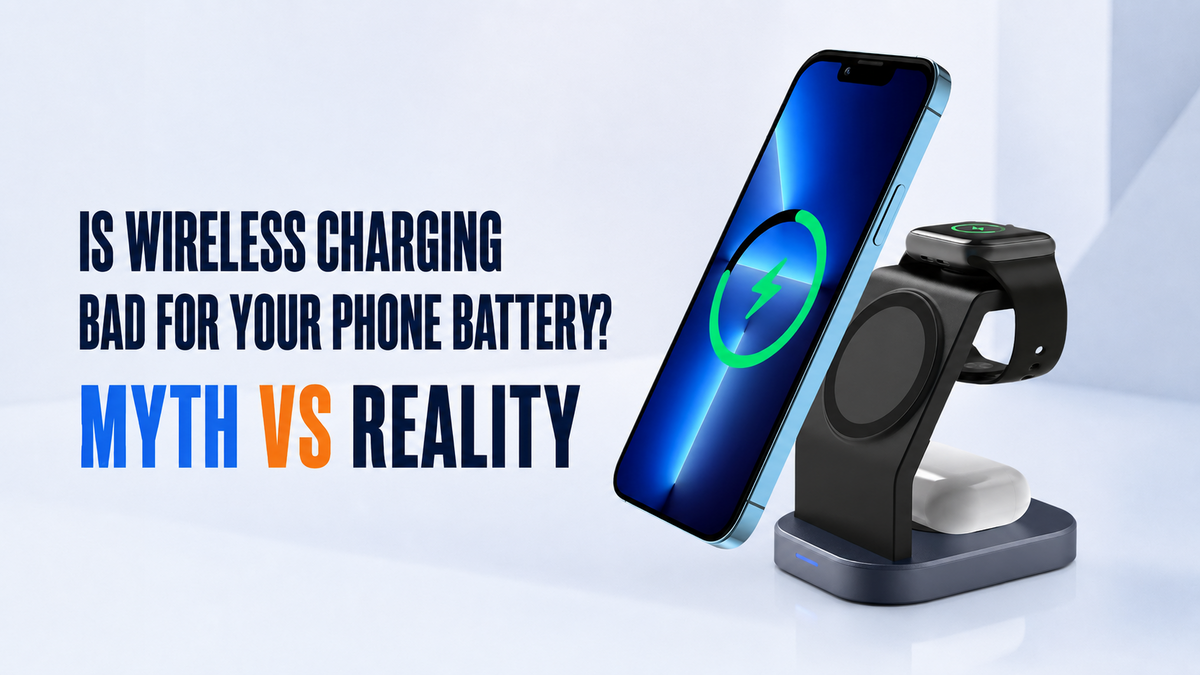
Does wireless charging damage your phone's battery? Discover how wireless charging works, the common myths, and practical tips to keep your battery healthy for longer.
Is Wireless Charging Bad for Your Phone Battery?
Wireless charging has become a popular feature on modern smartphones, offering the convenience of charging your device without plugging in a cable.
However, many users wonder:
"Will wireless charging damage my phone's battery?"
The short answer is No—wireless charging itself is not harmful to your battery when used correctly. However, certain habits and low-quality accessories can reduce battery lifespan over time.
Let's separate the myths from the facts.
How Does Wireless Charging Work?
Wireless charging uses electromagnetic induction.
A charging pad creates a magnetic field, which transfers energy to a receiver coil inside your phone. The phone then converts this energy into electricity to charge the battery.
Since there is no physical cable connection, charging is more convenient and reduces wear on the charging port.
Does Wireless Charging Damage the Battery?
Not directly.
Modern smartphones from brands like Apple, Samsung, Google, and others include intelligent charging systems that carefully control:
Charging speed Battery temperature Power delivery Overcharging protection
These systems are designed to keep battery charging safe whether you're using a cable or a wireless charger.
Why Do Phones Get Warmer During Wireless Charging?
Wireless charging is generally less efficient than wired charging. Some energy is naturally lost as heat during the transfer process.
A slight increase in temperature is completely normal.
However, excessive heat can shorten the lifespan of any lithium-ion battery over time.
When Can Wireless Charging Become a Problem?
Wireless charging may contribute to battery wear if:
You use a low-quality or uncertified charger. The charging pad is poorly ventilated. The phone becomes excessively hot while charging. Thick metal cases interfere with charging. You leave the phone charging in direct sunlight or inside a hot vehicle.
In these situations, heat—not wireless charging itself—is the main concern.
Does Fast Wireless Charging Reduce Battery Life?
Fast wireless charging produces more heat than standard wireless charging.
Modern phones monitor battery temperature and automatically reduce charging speed if necessary.
Occasional fast wireless charging is generally safe, but if maximum battery lifespan is your priority, standard charging generates less heat.
Wireless Charging vs Wired Charging Wireless Charging Wired Charging More convenient Faster charging speeds No cable wear Higher energy efficiency Reduces charging port wear Less heat in many situations Slightly more heat during charging Usually cooler when using certified chargers Great for overnight or desk charging Better when you need a quick charge
Both methods are safe when using certified accessories.
Tips to Keep Your Battery Healthy
Whether you charge wirelessly or with a cable:
✅ Use original or certified chargers.
✅ Remove very thick cases if your phone gets hot.
✅ Avoid charging in direct sunlight.
✅ Keep charging pads clean.
✅ Update your phone's software regularly.
✅ Don't leave your phone in a hot car while charging.
✅ If your phone becomes unusually hot, stop charging and let it cool.
Common Myths About Wireless Charging Myth 1: Wireless charging destroys the battery.
False.
Battery wear is mainly affected by heat, charging habits, and battery age—not simply because charging is wireless.
Myth 2: You should never leave your phone on a wireless charger overnight.
Mostly False.
Modern smartphones automatically stop charging when the battery reaches 100% and resume only when needed. Using a certified charger makes overnight charging generally safe, though avoiding unnecessary heat is still a good practice.
Myth 3: Wireless charging is always slower.
Partly True.
Standard wireless charging is often slower than wired charging, but many modern phones now support fast wireless charging that is suitable for everyday use.
When Should You Check Your Battery?
If you notice:
Battery drains very quickly Phone overheats during normal use Charging is unusually slow Battery percentage jumps unexpectedly Phone shuts down randomly Battery swelling
it's worth having the battery professionally inspected. These symptoms may indicate battery wear or another hardware issue.
Why Choose ATM Mobile Phone Repair?
At ATM Mobile Phone Repair, we provide professional battery diagnostics and repair services for all major smartphone brands.
Our services include:
Battery health testing Battery replacement Charging port repair Wireless charging diagnosis Charging IC repair Motherboard repair Overheating diagnosis Water damage inspection
We always diagnose the root cause before recommending a repair, helping customers avoid unnecessary replacements.
Final Thoughts
Wireless charging is a safe and convenient way to power your smartphone when used with high-quality, certified chargers.
The biggest factor affecting battery lifespan isn't whether you charge wirelessly or with a cable—it's heat. By keeping your phone cool and using reliable charging accessories, you can enjoy wireless charging without significantly affecting battery health.
If your phone overheats while charging or the battery no longer lasts as it should, visit ATM Mobile Phone Repair for a professional battery health check.
Was this article helpful?